
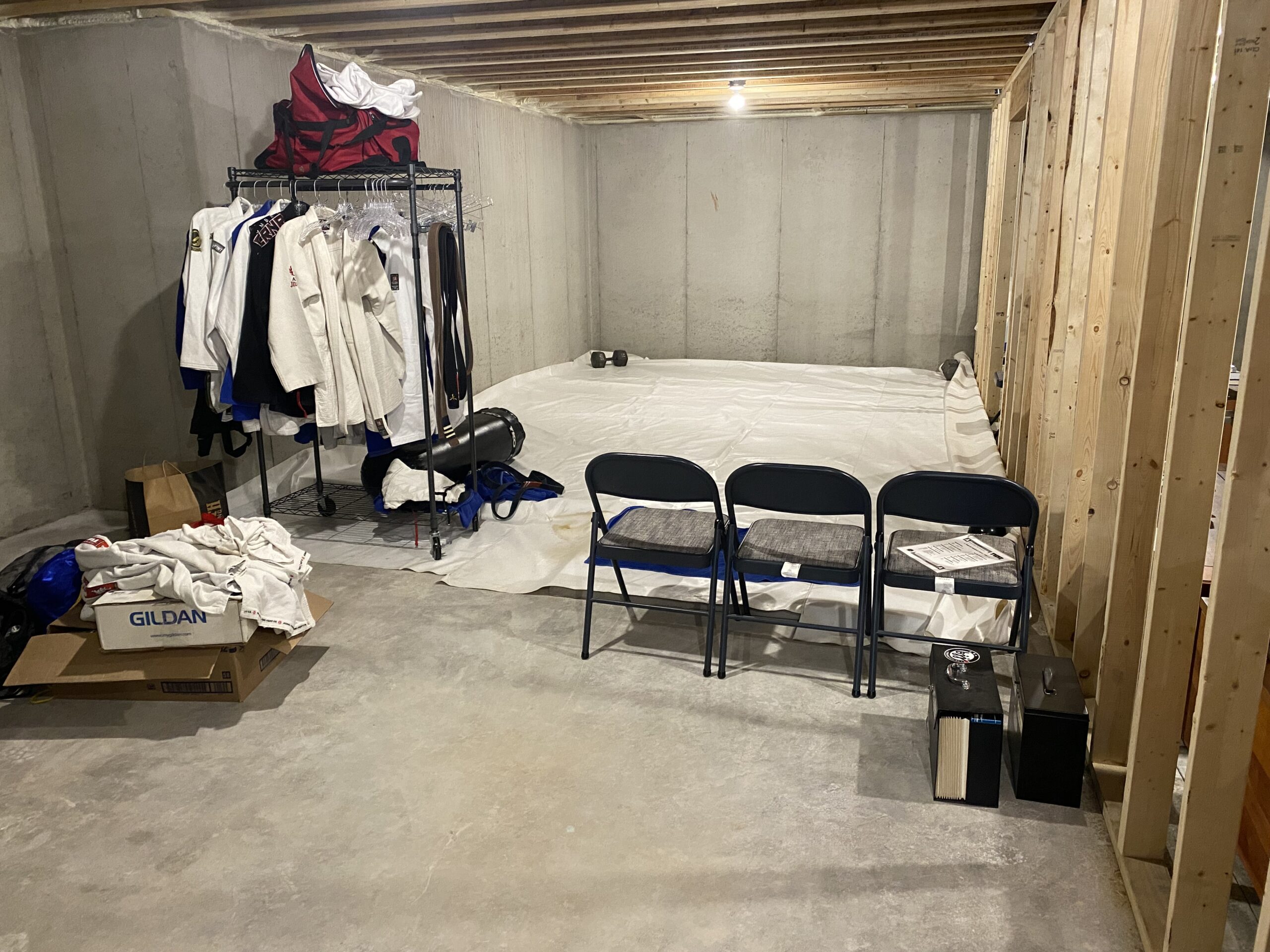
For those who are passionate about jiu-jitsu, setting up a home training area can really help bring your game to the next level. It can also add to the fun of training by allowing you to be with friends outside the formality of a typical academy. Whether you are reading this to set-up your first training area, or you are about to expand and existing set-up, congratulations!
The pre-build decisions I’m about to go over are meant more for the set-ups that will be left down permanently – either in a garage, basement, or room in a house. However, some of these decisions may be beneficial even if you plan on purchasing roll-out mats and stashing them away between sessions. Please carefully consider each one before moving forward to the actual construction.
How much mat space will I want?
Of course, every space and situation is going to be unique. There may be physical barriers that only allow a certain size. Budget can also play a real factor. That said, the smallest training area that I would recommend is 10 feet by 10 feet. Anything smaller would really only be good for solo drills and stretching. Even a 10 foot square area will feel tight once you start doing partner drills. For my home training area, I was limited to 12 feet wide due to a load-bearing wall in my basement. But, I was fortunate to be able to go 18 feet deep – which gave me 216 square feet of training space. I’ve found that’s enough for 2 groups of 2 sparring or 6 total for drilling.
Where should I set up my training area?
The size of your desired mat space is just one consideration about where to set up your training area. There are definite pros and cons with using a garage, basement, or interior room of a house. For example, a garage is nice because your training partners won’t need to go trampling in and through your home. Some of the downsides is now needing to park a car in the driveway all year. I can also tell you from personal experience that keeping garage mats clean can prove to be a challenge. Depending where you live, extreme hot or cold weather will also play a serious part in your decision. In a future article, I’ll spend more time comparing the pros and cons of garage and basement set-ups.
What is your budget?
Budget is simply a reality most of us need to contend with when building a training area. The idea of having a spring-loaded or foam block floating subfloor is awesome – until the bill comes due. Be sure you’ve put in the work to develop a realistic estimate and that you stick to the plan. Mats are expensive. Plywood is expensive. The last thing you want to do is get half way through only to realize you’re over-extended and can’t afford to finish. Using my build as an example, I spent about $1,750 not counting eventual wall mats and other accessories. Plan carefully.
Will I need a vapor barrier?
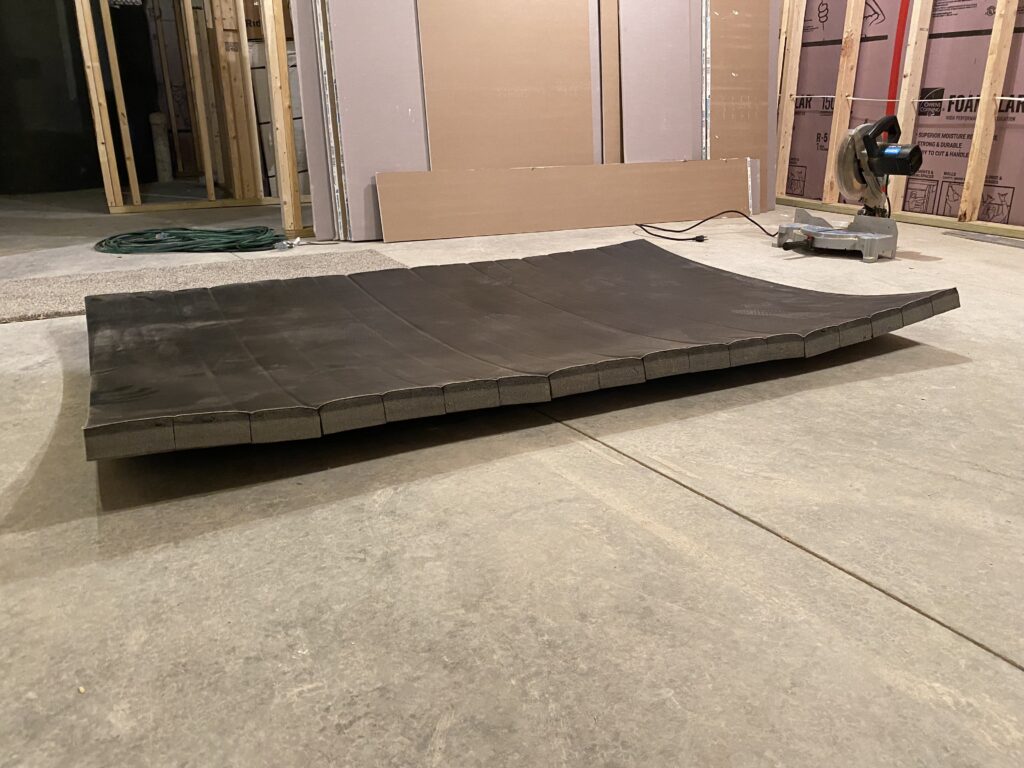
This is a good question whether you have a permanent set-up or are storing temporary mats between sessions. Think of a concrete surface like a glass of water. When the glass contains ice, condensation forms on the outside of the glass because the air temperature is warmer that the liquid inside. When you place mats directly over concrete (either flat or rolled up) moisture can get sucked up into the foam causing them to curl. Once your mats curl, it will be a pain trying to use them moving forward.
Do you have an honest assessment of your “handyman” skills?
Building subfloors and framing up mats really isn’t that difficult. But you do have to have some basic construction skills. Do you have all the tools you’ll need to get the job done? Got some friends who are willing to stop by and lend a hand? Some of the tools I needed to get my floor done included a power drill, compound miter saw, skill saw, saw horses, chalk line, quick-grip clamps, and utility knife.
Is your spouse going to be okay with everything?
This might be the most important question to ask. Is your spouse going to be okay with your new set-up? You’re going to have a lot of sweaty, smelly training partners hanging around the house. The will be the ongoing commitment to cleaning and maintaining the training space. Make sure he or she knows your plans well in advance so there are no surprises and no tension once completed.
The Jiu-Jitsu Basement is an online resource for those who either have or are looking to set up a home training area. I also teach private and semi-private jiu-jitsu lessons in NE Wisconsin. If I can help in any way, or answer any questions you may have, email Bill Krieg at jiujitsubasement@gmail.com.